
GUATEMALA · BIRDING REFERENCE
A guide to internationally important bird sites, the species that help identify them, and what the IBA and KBA designations mean in the field.
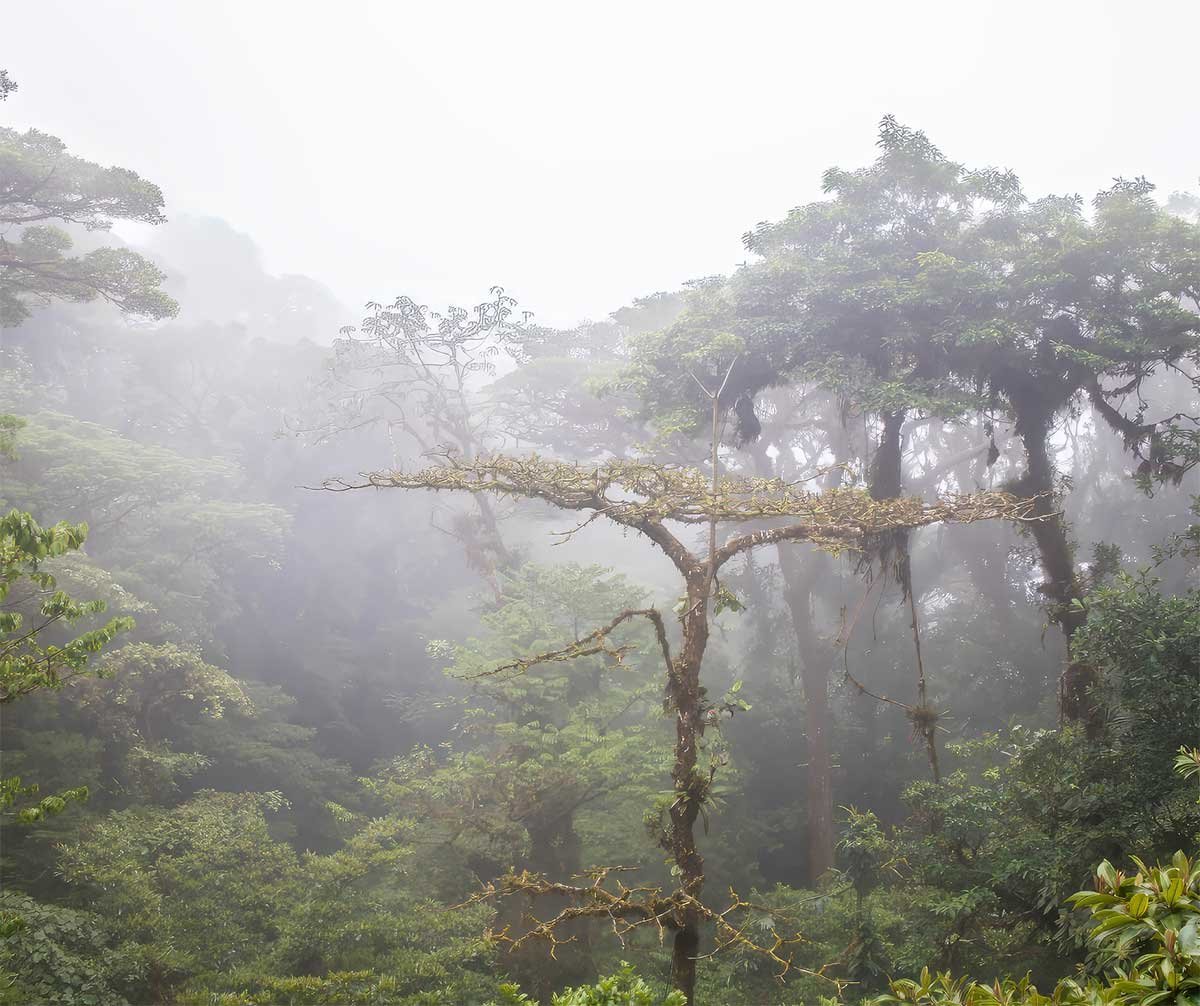
Cloud forest habitat — one of Guatemala’s important environments for birds.
Understanding IBAs and KBAs
Guatemala has 21 documented Important Bird and Biodiversity Areas (IBAs) in the BirdLife International 2018 register reproduced by Guatemala’s National Forest Institute (INAB). These sites contribute the bird-focused component of the wider Key Biodiversity Area network. The inventory below reflects that 2018 source, not a newly verified 2026 count.
- Maya–Lacandón (ID 20355)
- Río La Pasión (ID 20356)
- Chiquibul (ID 20358)
- Cuilco (ID 20359)
- Cuchumatanes (ID 20360)
- Cerro El Amay (ID 20363)
- Sacranix (ID 20364)
- Lachuá–Ik’bolay (ID 20365)
- Candelaria–Campur (ID 20366)
- Caribe de Guatemala (ID 20367)
- Yalijux (ID 20368)
- Sierra de las Minas–Motagua (ID 20369)
- Tacaná–Tajumulco (ID 20370)
- Volcán Santiaguito (ID 20371)
- Atitlán (ID 20372)
- Antigua Guatemala (ID 20373)
- Cerro Miramundo (ID 20375)
- Montecristo (ID 20377)
- Lago de Güija (ID 20378)
- Manchón–Guamuchal (ID 20379)
- Monterrico–Río La Paz (ID 20381)
Source: INAB, Table 8, citing BirdLife International (2018). Site assessments and boundaries may subsequently change.
Guatemala contains mountain forests, tropical lowlands, dry valleys and wetlands that support very different bird communities. Some places are especially important because they hold significant populations of threatened birds, restricted-range species, or characteristic bird assemblages.
Important Bird and Biodiversity Areas (IBAs) are identified using scientific criteria focused on birds. Key Biodiversity Areas (KBAs) are sites important to the global persistence of biodiversity more broadly. The designations often overlap, but they are not identical. Neither designation alone guarantees legal protection or public access.
The national list of 21 IBAs is included above. The individual site profiles below are selected examples, not all 21 areas.
How sites are identified
IBA criteria include significant populations of globally threatened birds, restricted-range species, bioregion-restricted assemblages and large concentrations of birds. The KBA framework also considers threatened and geographically restricted biodiversity, ecological integrity, biological processes and irreplaceability.
Assessment dates, site boundaries and qualifying species matter. A bird occurring at a site does not necessarily mean it qualifies that site, and a species included in a site assessment is not guaranteed to be found during a short visit.
Selected important bird sites in Guatemala
The names below refer to broad mapped Important Bird and Biodiversity Areas (IBAs), not necessarily the towns or visitor attractions that share those names. Their boundaries encompass different elevations, habitats and land uses. Follow the linked BirdLife or Key Biodiversity Areas records for site-level details; the Atitlán link provides related species information.
Lake Atitlán and neighboring western highlands
Atitlán
The Atitlán IBA refers to a broader volcanic highland landscape around the lake, including mountain slopes and forests rather than only the shoreline. Its conservation value lies in these varied habitats, particularly remaining high-elevation forest. The designation should not be read as a list of birds expected around Panajachel or other lakeside towns.
Huehuetenango and the northwestern highlands
Cuchumatanes
This area covers part of the Sierra de los Cuchumatanes, the extensive mountain system of northwestern Guatemala. The designated landscape includes high ridges and valleys, coniferous, broadleaf and mixed forests, agricultural land and secondary vegetation. Its importance relates to birds of the northern Central American highlands, not to a single town or accessible birding trail.
Northeastern mountains and the Motagua Valley
Sierra de las Minas–Motagua
This large conservation area includes the Sierra de las Minas and Sierra de Chuacús mountain ranges together with the adjoining Motagua Valley. It reaches from humid mountain and cloud forests into much lower, dry thorn-scrub and valley habitats. These ecosystems support different bird communities; a record associated with the IBA cannot be assumed to apply throughout its full extent.
Volcanic highlands surrounding Antigua
Antigua Guatemala
Despite its name, this IBA is not limited to Antigua's historic city or the Panchoy Valley. The designated landscape extends through the surrounding volcanic belt, including Agua, Acatenango and Fuego, and reaches southeast to Pacaya. It contains mountain forests, pine-oak woodland, cultivated slopes and coffee-growing areas. BirdLife's species associations refer to this broad conservation landscape, not to sightings within the colonial city.
Izabal and Guatemala's Caribbean-facing region
Guatemalan Caribbean Slope
This extensive IBA encompasses parts of Guatemala's Caribbean-facing region, including terrestrial and coastal environments. It brings together lowland forest and other coastal and watershed habitats rather than one compact birdwatching locality. BirdLife recognizes its importance for Caribbean-slope bird communities, while habitat loss and fragmentation remain conservation concerns.
Using IBA and KBA information as a birder
Prepare for the specific habitat. Important sites often extend far beyond the places regularly visited by birding groups. Check elevation, season, recent bird records and the habitats associated with your target species.
Respect access and sensitive species. Confirm local permissions and protected-area rules. Avoid disturbing nests and roosts, and be cautious about publishing precise locations for sensitive birds.
Interpret the data carefully. An IBA designation shows long-term international importance. Recent field records show what other observers have encountered lately. These are different, complementary kinds of evidence.
Sources and further reading
The explanations and site summaries here are original editorial text informed by BirdLife’s Guatemala factsheet, IBA criteria, and KBA criteria. For habitat context, see Biomes of Guatemala. You can also explore our 83 bird-family directory.
Reviewed November 2026. The 21 IBA sites shown here follow BirdLife International (2018), cited by INAB.